What YFC is Doing

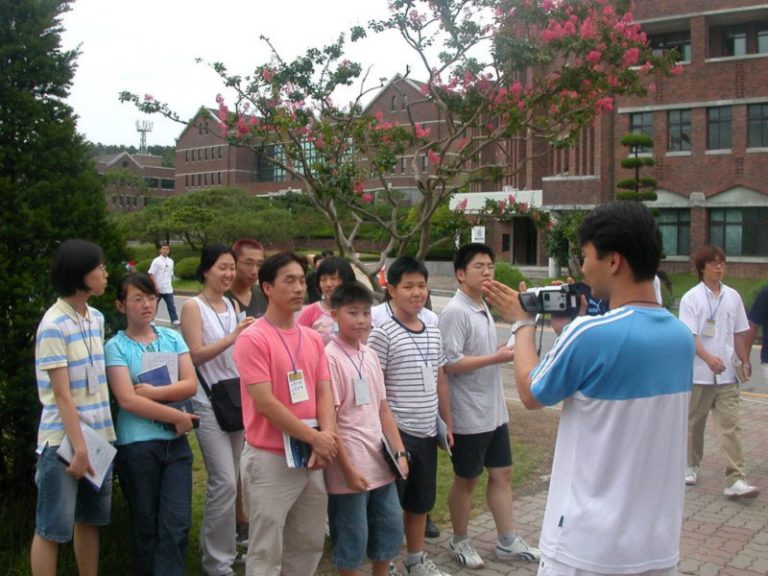
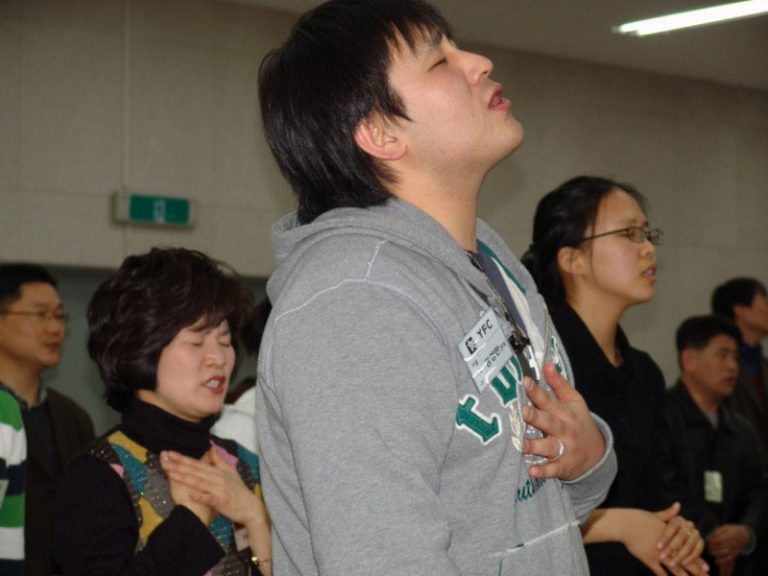
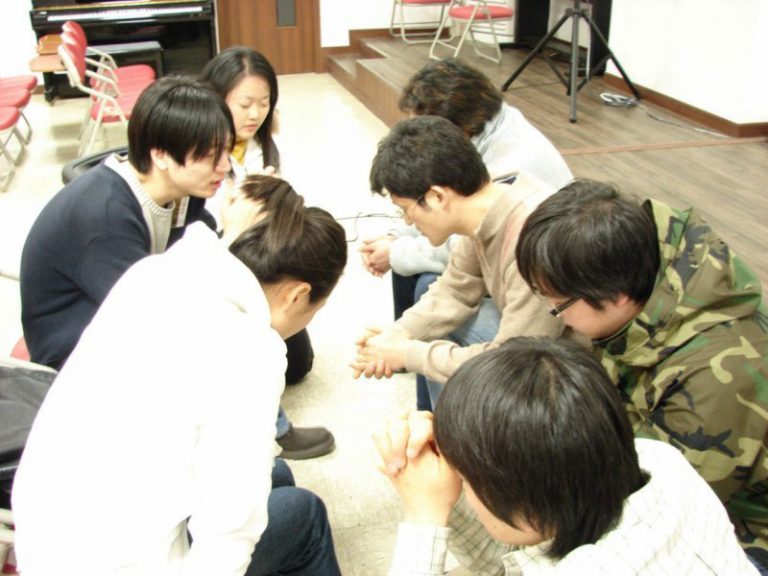
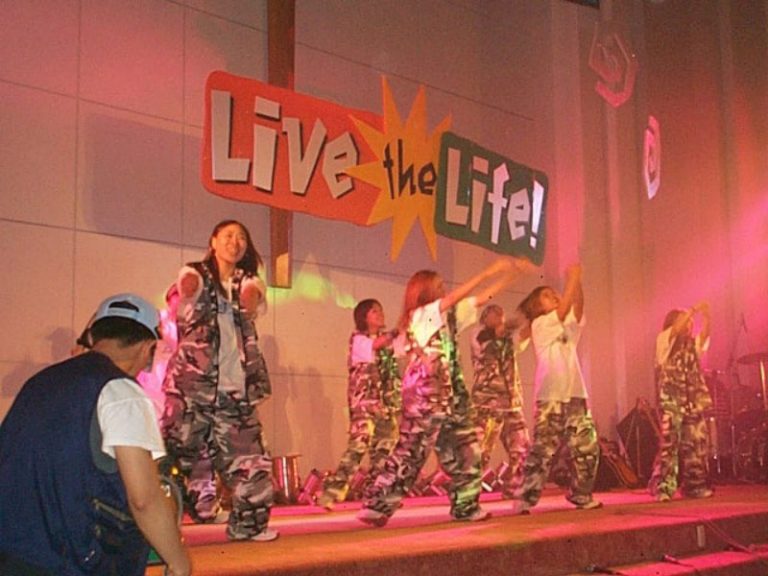
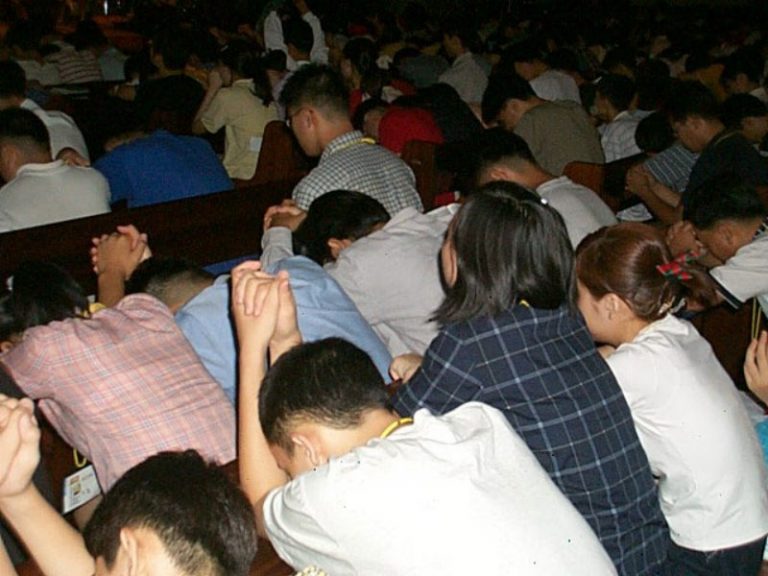
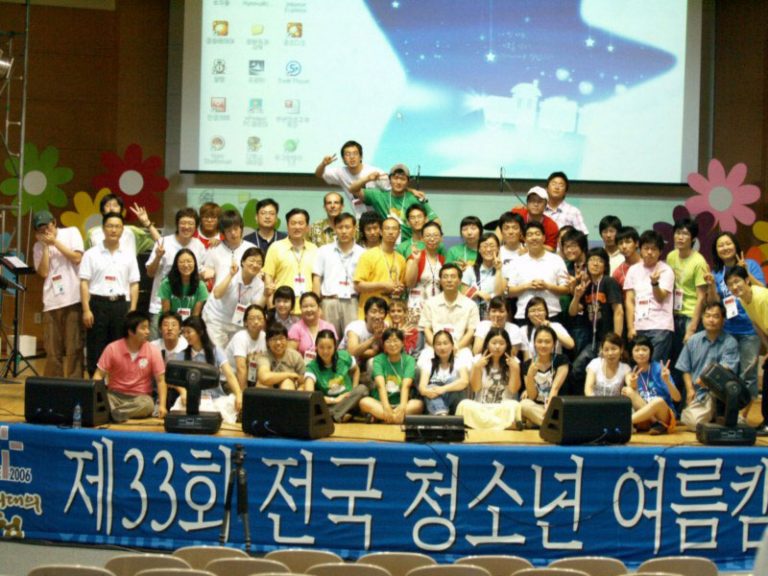
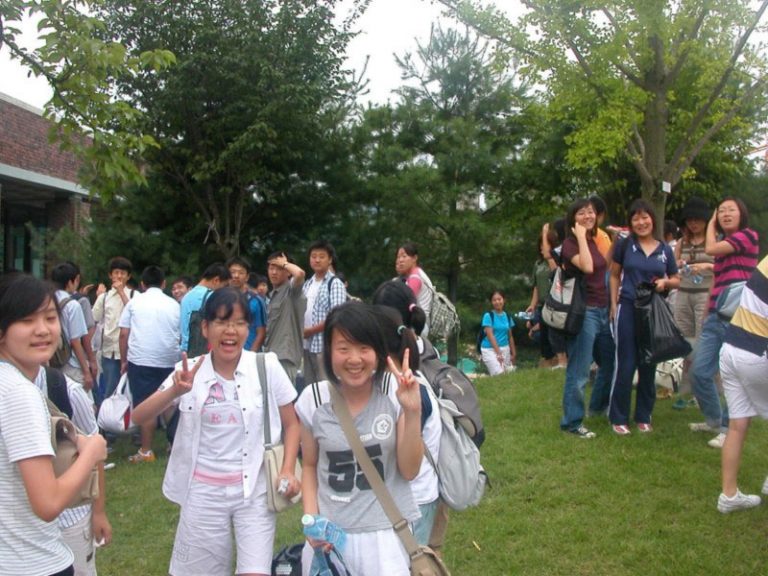
Korea YFC’s ministry in over 19 centers around the country includes clubs, rallies, youth camps, Youth Guidance, training for volunteers, church youth leaders, counseling ASK Academy, and a training school for church leaders.

Staff and volunteers operate out of 19 centers across Korea and have contact with over 60,000 young people annually and regulary disciple over 2,000 young people each year.

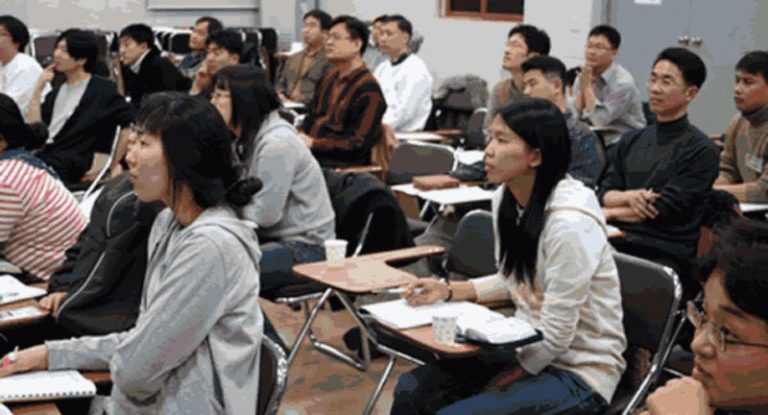
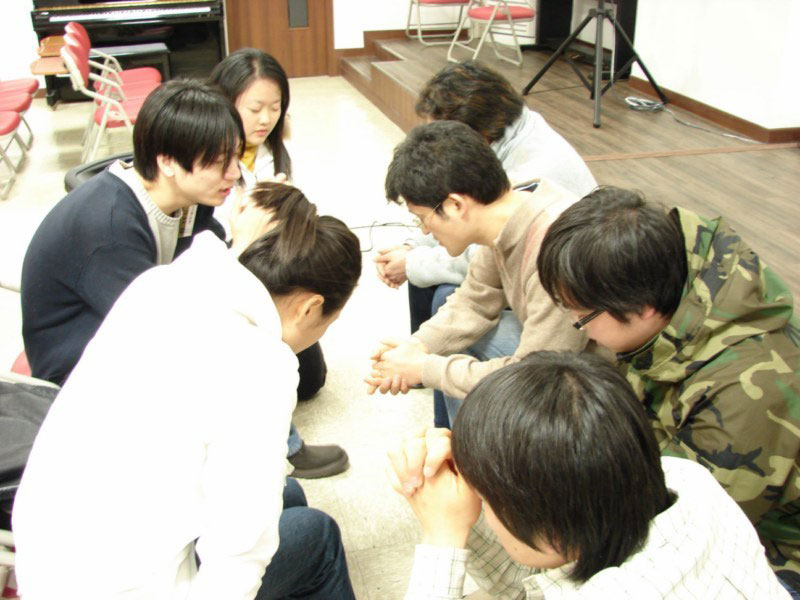
Leadership training is a key component of the ministry of YFC Korea. Training youth leaders, church leaders, staff, and volunteer adult leaders is a regular part of our ministry.
About Korea

Korea, South

Introduction

An independent Korean state or collection of states has existed almost continuously for several millennia. Between its initial unification in the 7th century - from three predecessor Korean states - until the 20th century, Korea existed as a single independent country. In 1905, following the Russo-Japanese War, Korea became a protectorate of imperial Japan, and in 1910 it was annexed as a colony. Korea regained its independence following Japan's surrender to the United States in 1945. After World War II, a Republic of Korea (ROK) was set up in the southern half of the Korean Peninsula while a Communist-style government was installed in the north (the DPRK). During the Korean War (1950-53), US troops and UN forces fought alongside soldiers from the ROK to defend South Korea from DPRK attacks supported by China and the Soviet Union. An armistice was signed in 1953, splitting the peninsula along a demilitarized zone at about the 38th parallel. Thereafter, South Korea achieved rapid economic growth with per capita income rising to roughly 14 times the level of North Korea. In 1993, KIM Young-sam became South Korea's first civilian president following 32 years of military rule. South Korea today is a fully functioning modern democracy. In June 2000, a historic first North-South summit took place between the South's President KIM Dae-jung and the North's leader KIM Jong Il. In October 2007, a second North-South summit took place between the South's President ROH Moo-hyun and the North Korean leader. Harsh rhetoric and unwillingness by North Korea to engage with President LEE Myung-bak following his February 2008 inauguration has strained inter-Korean relations.

Geography

Location

Location: Eastern Asia, southern half of the Korean Peninsula bordering the Sea of Japan and the Yellow Sea
Geographic Coordinates: 37 00 N, 127 30 E

Area

Total Area: 99,720 sq km Rank: 108
Land Area: 96,920 sq km
Water Area: 2,800 sq km
Comparison: slightly larger than Indiana
Land Boundaries: 238 km
Bordering Countries: North Korea 238 km
Coastline: 2,413 km

Climate

temperate, with rainfall heavier in summer than winter

Terrain

mostly hills and mountains; wide coastal plains in west and south

Elevations

Lowest Point: Sea of Japan 0 m
Highest Point: Halla-san 1,950 m

Natural Resources

coal, tungsten, graphite, molybdenum, lead, hydropower potential

Land Use

Arable land: 16.58%
Permanent Crops: 2.01%
Other: 81.41% (2005)
Irrigated Land: 8,780 sq km (2003)
Renewable Water Resources: 69.7 cu km (1999)
Total Freshwater withdrawal (domestic/industrial/agricultural): 18.59 cu km/yr (36%/16%/48%)
Freshwater Withdrawal Per Capita: 389 cu m/yr (2000)

Environment

Natural Hazards: occasional typhoons bring high winds and floods; low-level seismic activity common in southwest
Environmental Issues: air pollution in large cities; acid rain; water pollution from the discharge of sewage and industrial effluents; drift net fishing
Environmental Agreements: Party to: Antarctic-Environmental Protocol, Antarctic-Marine Living Resources, Antarctic Treaty, Biodiversity, Climate Change, Climate Change-Kyoto Protocol, Desertification, Endangered Species, Environmental Modification, Hazardous Wastes, Law of the Sea, Marine Dumping, Ozone Layer Protection, Ship Pollution, Tropical Timber 83, Tropical Timber 94, Wetlands, Whaling

Geography Notes

strategic location on Korea Strait

People

Population: 48,508,972 (July 2010 est.) Rank: 25

Age Structure

0-14 years: 16.8% (male 4,278,581/female 3,887,516)
15-64 years: 72.3% (male 17,897,053/female 17,196,840)
65 years and over: 10.8% (male 2,104,589/female 3,144,393) (2010 est.)
Median Age: 36.5 years

Population Growth

Growth Rate: 0.266% (2010 est.) Rank: 179
Birth Rate: 8.93 births/1,000 population (2010 est.) Rank: 212
Death Rate: 5.94 deaths/1,000 population (July 2010 est.) Rank: 165
Net Migration Rate: -0.33 migrant(s)/1,000 population (2010 est.) Rank: 99

Urbanization

Urban Population: 81% of total population (2008)
Rate of Urbanization: 0.6% annual rate of change (2005-10 est.)

Life and Death

Infant Mortality Rate: 4.26 deaths/1,000 live births Rank: 204
Life Expectancy at Birth: 78.72 years Rank: 41
Fertility Rate: 1.22 children born/woman (2010 est.) Rank: 219

Health and Disease

HIV/AIDS - Adult Prevalence Rate: less than 0.1% (2007 est.) Rank: 148
People living with HIV/AIDS: 13,000 (2007 est.) Rank: 94
HIV/AIDS Deaths: fewer than 500 (2007 est.) Rank: 87

Nationality and Culture

Noun: Korean(s)
Adjective: Korean
Ethnic Groups: homogeneous (except for about 20,000 Chinese)
Religion: Christian 26.3% (Protestant 19.7%, Roman Catholic 6.6%), Buddhist 23.2%, other or unknown 1.3%, none 49.3% (1995 census)
Languages: Korean, English widely taught in junior high and high school

Education

Literacy (Meaning, age 15 and over can read and write): 97.9% Male: 99.2% Female: 96.6% (2002)
School life expectancy (primary to tertiary education): 17 years Male: 18 years Female: 15 years (2007)
Education expenditures: 4.6% of GDP (2004) Rank: 84

Government

Country Name

Conventional Long Form: Republic of Korea
Conventional Short Form: South Korea
Local Long Form: Taehan-min'guk
Local Short Form: Han'guk
Abbreviation: ROK
Government Type: republic
Capital: Seoul Geographic Coordinates: 37 33 N, 126 59 E

Administrative divisions

Provinces: 9 provinces (do, singular and plural) and 7 metropolitan cities (gwangyoksi, singular and plural): Cheju-do, Cholla-bukto (North Cholla), Cholla-namdo (South Cholla), Ch'ungch'ong-bukto (North Ch'ungch'ong), Ch'ungch'ong-namdo (South Ch'ungch'ong), Kangwon-do, Kyonggi-do, Kyongsang-bukto (North Kyongsang), Kyongsang-namdo (South Kyongsang)
Metropolitan Cities: Inch'on-gwangyoksi, Kwangju-gwangyoksi, Pusan-gwangyoksi, Soul-t'ukpyolsi, Taegu-gwangyoksi, Taejon-gwangyoksi, Ulsan-gwangyoksi
Independence: 15 August 1945 (from Japan)
National holiday: Liberation Day, 15 August (1945)
Constitution: 17 July 1948; note - amended or rewritten many times; current constitution approved on 29 October 1987
Legal system: combines elements of continental European civil law systems, Anglo-American law, and Chinese classical thought; has not accepted compulsory ICJ jurisdiction
Suffrage: 19 years of age; universal

Executive Branch

Chief of State: President LEE Myung-bak (since 25 February 2008)
Head of Government: Prime Minister (vacant)
Cabinet: State Council appointed by the president on the prime minister's recommendation
Elections: president elected by popular vote for a single five-year term; election last held on 19 December 2007 (next to be held in December 2012); prime minister appointed by president with consent of National Assembly
Election Results: LEE Myung-bak elected president on 19 December 2007; percent of vote - LEE Myung-bak (GNP) 48.7%; CHUNG Dong-young (UNDP) 26.1%); LEE Hoi-chang (independent) 15.1; others 10.1%

Legislative Branch

unicameral National Assembly or Kukhoe (299 seats; 245 members elected in single-seat constituencies, 54 elected by proportional representation; members serve four-year terms)
Elections: last held on 9 April 2008 (next to be held in April 2012)
Election Results: percent of vote by party - NA; seats by party - GNP 172, UDP 83, LFP 20, PPA 8, DLP 5, RKP 1, independents 9

Judicial branch

Supreme Court (justices appointed by the president with consent of National Assembly); Constitutional Court (justices appointed by the president based partly on nominations by National Assembly and Chief Justice of the court)

Politics

Political Parties and Leaders: Democratic Party or DP [CHUNG Sye-kyun] (formerly the United Democratic Party or UDP); Democratic Labor Party or DLP [KANG Ki-kap]; Grand National Party or GNP [AHN Sang-soo]; Liberty Forward Party or LFP [LEE Hoi-chang]; New Progressive Party or NPP [ROH Hoe-chan]; Pro-Park Alliance or PPA [SUH Choung-won]; Renewal Korea Party or RKP [SONG Yong-o]
Political Pressure Groups and Leaders: Federation of Korean Industries; Federation of Korean Trade Unions; Korean Confederation of Trade Unions; Korean National Council of Churches; Korean Traders Association; Korean Veterans' Association; National Council of Labor Unions; National Democratic Alliance of Korea; National Federation of Farmers' Associations; National Federation of Student Associations
International Organization Participation: ADB, AfDB (nonregional member), APEC, APT, ARF, ASEAN (dialogue partner), Australia Group, BIS, CD, CICA, CP, EAS, EBRD, FAO, FATF, G-20, IADB, IAEA, IBRD, ICAO, ICC, ICCt, ICRM, IDA, IEA, IFAD, IFC, IFRCS, IHO, ILO, IMF, IMO, IMSO, Interpol, IOC, IOM, IPU, ISO, ITSO, ITU, ITUC, LAIA, MIGA, MINURSO, NEA, NSG, OAS (observer), OECD, OPCW, OSCE (partner), Paris Club (associate), PCA, PIF (partner), SAARC (observer), UN, UNCTAD, UNESCO, UNHCR, UNIDO, UNIFIL, UNMIL, UNMIS, UNMOGIP, UNOCI, UNWTO, UPU, WCO, WFTU, WHO, WIPO, WMO, WTO, ZC
Flag Description: white with a red (top) and blue yin-yang symbol in the center; there is a different black trigram from the ancient I Ching (Book of Changes) in each corner of the white field; the Korean national flag is called Taegukki; white is a traditional Korean color and represents peace and purity; the blue section represents the negative cosmic forces of the yin, while the red symbolizes the opposite postive forces of the yang; each trigram (kwae) denotes one of the four universal elements, which together express the principle of movement and harmony

Economy

Economy Overview: Since the 1960s, South Korea has achieved an incredible record of growth and global integration to become a high-tech industrialized economy. Four decades ago, GDP per capita was comparable with levels in the poorer countries of Africa and Asia. In 2004, South Korea joined the trillion dollar club of world economies, and currently is among the world's twenty largest economies. Initially, a system of close government and business ties, including directed credit and import restrictions, made this success possible. The government promoted the import of raw materials and technology at the expense of consumer goods, and encouraged savings and investment over consumption. The Asian financial crisis of 1997-98 exposed longstanding weaknesses in South Korea's development model including high debt/equity ratios and massive short-term foreign borrowing. GDP plunged by 6.9% in 1998, and then recovered by 9% in 1999-2000. Korea adopted numerous economic reforms following the crisis, including greater openness to foreign investment and imports. Growth moderated to about 4-5% annually between 2003 and 2007. With the global economic downturn in late 2008, South Korean GDP growth slowed to 2.2% in 2008 and declined 0.2% in 2009. In the third quarter of 2009, the economy began to recover, in large part due to export growth, low interest rates, and an expansionary fiscal policy. The South Korean economy's long term challenges include a rapidly aging population, inflexible labor market, and overdependence on manufacturing exports to drive economic growth.

Gross Domestic Product

GDP (purchasing power parity): $1.364 trillion (2009 est.) Rank: 13
GDP - real growth rate: 0.2% (2009 est.) Rank: 110
GDP - per capita (PPP): $28,100 (2009 est.) Rank: 49
GDP - Composition by Sector: Agriculture: 3% Industry: 39.4% Services: 57.6% (2008 est.)

Labor Force

Labor Force: 24.4 million (2009 est.) Rank: 25
Labor force - by occupation: Agriculture: 7.2% Industry: 25.1% Services: 67.7% (2007 est.)
Unemployment Rate: 3.7% (2009 est.) Rank: 31

Poverty

Population below poverty line: 15% (2003 est.)

Transnational Issues

Disputes - international: Military Demarcation Line within the 4-km wide Demilitarized Zone has separated North from South Korea since 1953; periodic incidents with North Korea in the Yellow Sea over the Northern Limit Line, which South Korea claims as a maritime boundary; South Korea and Japan claim Liancourt Rocks (Tok-do/Take-shima), occupied by South Korea since 1954

Want to know more? Show Full Profile